
Pneumatic tools offer manufacturing facilities a reliable, cost-effective, and high-performance alternative to electric tools. Powered by compressed air, they deliver consistent torque, reduced maintenance demands, and longer operational lifespans. For facilities running high-volume production lines, these tools reduce downtime, improve worker safety, and lower total cost of ownership compared to battery-powered or corded electric alternatives.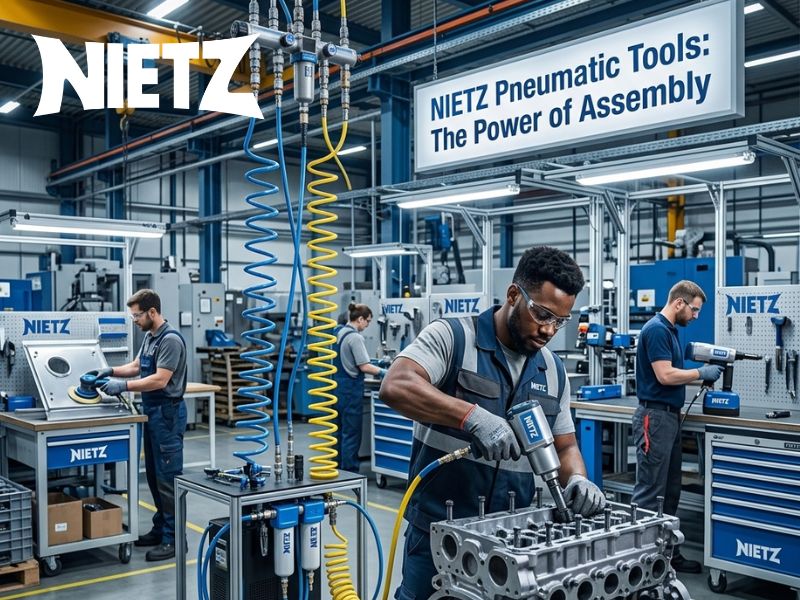
Pneumatic tools have been a cornerstone of industrial production for decades - and for good reason. In manufacturing environments where speed, precision, and reliability are non-negotiable, air-powered tools consistently outperform alternatives across nearly every measurable metric. Whether you are running an automotive assembly line, a metal fabrication shop, or a heavy equipment facility, the case for switching to or expanding your air tool inventory is compelling.
Here are seven concrete benefits that explain why manufacturing companies continue to rely on industrial air tools as their go-to solution on the production floor.
1. Higher Power-to-Weight Ratio Than Electric Tools
One of the most immediate advantages pneumatic tools offer is a superior power-to-weight ratio. These tools pack significant torque and rotational speed into a compact, lightweight body - making them easier to handle during extended shifts without causing operator fatigue.
For repetitive assembly tasks, this matters enormously. A lighter tool means workers maintain better control, reduce strain injuries, and sustain output quality across an eight-hour shift. In contrast, heavy electric tools often contribute to cumulative fatigue and increased error rates over time.
2. Lower Acquisition and Maintenance Costs
From a capital expenditure standpoint, pneumatic tools are typically more affordable upfront than comparable electric or cordless models. But the real savings show up over time.
Air tools have fewer moving parts than electric tools - no motors, no brushes, no circuit boards. This simplicity translates directly into lower repair costs and less frequent maintenance. A single compressed air system can power an entire production floor, eliminating the need for individual batteries, chargers, or replacement power packs across dozens of tools.
For manufacturing companies managing tight operational budgets, this reduction in total cost of ownership makes air tools a financially sound long-term investment.
3. Consistent Performance Under Continuous Use
Electric tools - particularly cordless models - lose power as batteries drain. Pneumatic tools do not have this problem. As long as the compressor maintains adequate pressure, the tool performs at full capacity from the first use to the last.
This consistency is critical in high-throughput manufacturing environments. Inconsistent torque or speed can lead to product defects, assembly errors, or rework - all of which add cost and delay. Air tools eliminate this variable entirely, providing the same output at 7 a.m. as they do at 7 p.m.
4. Enhanced Durability in Harsh Industrial Environments
Manufacturing floors are demanding environments. Heat, dust, moisture, vibration, and chemical exposure are everyday realities. Pneumatic tools are built to withstand these conditions far better than most electric tools.
Because they contain no electrical components, air tools are naturally resistant to moisture and do not carry the same risk of short circuits or electrical failure in wet or humid conditions. In Malaysia's manufacturing sector - where humidity levels regularly exceed 80% - this resistance to environmental stress is a practical necessity, not just a feature.
The robust construction of industrial air tools means they also hold up better under heavy-duty, continuous use - outlasting electric equivalents in most production settings.
5. Improved Workplace Safety
Safety compliance is a priority for any manufacturing facility operating under occupational health and safety regulations. Pneumatic tools carry a lower risk profile compared to electric tools in several key areas:
No electrocution risk - Air tools contain no live electrical components, eliminating the risk of electric shock in wet or metallic environments.
Lower fire and explosion risk - In environments where flammable materials or gases are present, removing electrical tools reduces ignition risk significantly.
Reduced heat generation - Air tools run cooler, minimising burn risks and reducing the chance of heat-related equipment failure.
Built-in overload protection - Many pneumatic tools stall safely under excessive load rather than overheating or causing electrical faults.
These characteristics help facilities maintain safer working conditions and reduce the frequency of workplace incidents - which has both human and financial implications.
6. Greater Versatility Across Production Tasks
A single compressed air system can support a wide range of manufacturing tools — from impact wrenches and grinders to sanders, drills, riveters, and spray guns. This versatility means a well-designed pneumatic setup can serve multiple departments within the same facility.
The interchangeability of air tools also simplifies inventory management. One compressor system, one maintenance protocol, and one source of power for dozens of different applications. That kind of operational efficiency is difficult to replicate with a mixed fleet of electric and battery-powered tools.
For manufacturing tools procurement teams, consolidating around a pneumatic ecosystem reduces supplier complexity and streamlines servicing contracts.
7. Faster Cycle Times and Increased Productivity
At the end of the day, productivity is the metric that matters most on a manufacturing floor. Pneumatic tools are engineered for speed. High RPM, rapid actuation, and instant-on response mean tasks are completed faster - and that speed compounds across hundreds of operations per shift.
Consider an automotive assembly line where fasteners are tightened thousands of times daily. Even a marginal improvement in cycle time per fastener - say, one or two seconds - results in significant time savings and higher output volumes across a full production day.
Facilities that have transitioned from manual or electric tooling to pneumatic systems frequently report measurable improvements in throughput, particularly in assembly, finishing, and material removal processes.
What to Consider When Selecting Pneumatic Tools for Your Facility
Not all air tools are created equal, and selecting the right equipment for your specific application matters. Here are the key factors to evaluate:
Factor
What to Look For
Air Pressure Requirements (PSI)
Match the tool's PSI rating to your compressor output
Air Consumption (CFM)
Ensure your compressor can sustain adequate flow rate
Duty Cycle
Select tools rated for continuous industrial use if running full shifts
Tool Material and Build Quality
Prioritise metal-body tools for heavy-duty environments
Ergonomics
Consider grip, weight, and vibration levels for operator comfort
Spare Parts Availability
Choose brands with accessible local service and parts support
Making the Right Investment for Your Production Floor
The productivity gains, durability, safety improvements, and cost efficiencies that pneumatic tools deliver are not theoretical - they are proven across manufacturing sectors ranging from automotive and aerospace to furniture production and electronics assembly.
For manufacturing companies in Malaysia looking to equip or upgrade their facilities with quality air tools, Nietz offers a comprehensive range of industrial-grade pneumatic solutions designed to meet the demands of modern production environments. Selecting the right tools from a trusted supplier is the first step toward measurable gains on your production floor.
Frequently Asked Questions
What are pneumatic tools used for in manufacturing?
Pneumatic tools are used for fastening, grinding, drilling, sanding, riveting, and surface finishing in manufacturing facilities. They are powered by compressed air and are widely used in automotive, metalworking, electronics, and heavy equipment production due to their speed, consistency, and durability under continuous industrial use.
Are pneumatic tools better than electric tools for industrial use?
For most high-volume industrial applications, pneumatic tools outperform electric tools in durability, power-to-weight ratio, and consistent output. They have fewer failure points, lower maintenance costs, and no performance drop from battery depletion - making them the preferred choice for continuous production environments.
How do pneumatic tools improve workplace safety?
Pneumatic tools eliminate electrocution risk, run cooler than electric tools, and are inherently safer in environments with flammable materials or high humidity. Their simpler mechanical design also reduces the risk of sudden failure, helping manufacturing facilities maintain compliance with occupational safety standards.
What compressor capacity do I need to run pneumatic tools in a facility?
Compressor capacity depends on the number of tools running simultaneously and their combined CFM (cubic feet per minute) requirements. For a multi-tool production floor, a high-capacity industrial air compressor with a buffer tank is typically recommended to maintain consistent pressure across all connected tools.
How long do pneumatic tools last in industrial settings?
With proper maintenance - including regular lubrication, moisture trap servicing, and periodic inspection - quality industrial air tools can last significantly longer than electric equivalents.
What should I look for when buying pneumatic tools for a manufacturing facility?
Prioritise tools rated for continuous industrial use, with PSI and CFM specs matched to your compressor. Evaluate build quality, ergonomics, and local parts availability.